5 great external knowledge bases (and what you can learn from them)
Keeping a good knowledge base can be daunting. In this article, we go through 5 examples of good knowledge bases and what features make them stand out.
An external knowledge base is a hub of helpful content about your product, service, or platform, designed to help customers solve problems on their own. When done well, it becomes one of the most valuable parts of your customer experience. A well-maintained knowledge base saves time for both users and support teams by reducing unnecessary support tickets, helping customers unblock themselves faster, and freeing up your team to focus on higher-impact work.
We've curated a list of 5 companies that serve their own external knowledge base - and they do it well. If you're unfamiliar with the what and whys of external knowledge bases, I encourage you to check out our post on what external knowledge bases are, which will give you a good, broad understanding on the subject.
1) Stripe
During the late 2010s, Stripe grew to immense popularity among developers. In part because the company solved a long-lasting problem of easily handling payments online in a robust way, but also because their documentation was incredibly well laid out, both content-wise and aesthetically.
Stripe is one of the most well-known examples of a great external knowledge base and is often considered the gold standard for technical documentation. As a fintech company providing payment infrastructure for developers and businesses, the docs act as a core entry point to the product and play a big role in onboarding and support deflection.
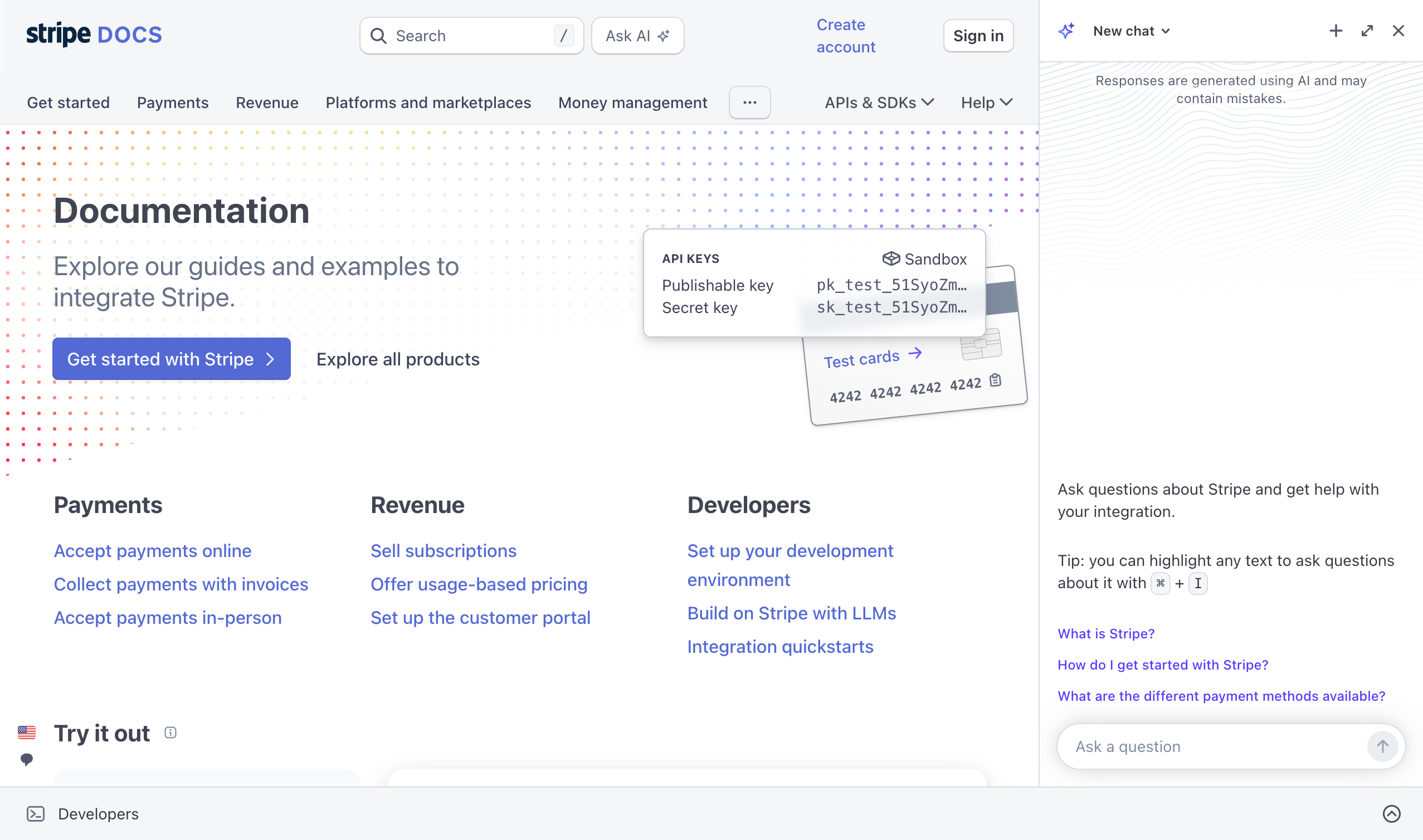
The public documentation is structured around real-world workflows rather than just raw API references (but references back to those in the content), and has a clear hierarchy and fast, relevant search that makes it easy to find answers at any level. This makes the knowledge base genuinely useful for both new users and experienced teams looking for specific details.
Once logged in, Stripe takes the knowledge base experience even further with an integrated workbench that lets developers try out requests, explore endpoints, and see example responses against their own test data.
Combined with features like LLM-powered doc search and chat, Stripe shows how a strong public knowledge base can seamlessly extend into a more powerful, hands-on in-product learning experience.
2) Webflow University
Webflow University is a strong example of an external knowledge base built primarily for non-technical users. Rather than focusing on reference-style documentation, Webflow frames its knowledge base as a learning hub designed to help customers go from zero to confidently building and publishing websites with the product.
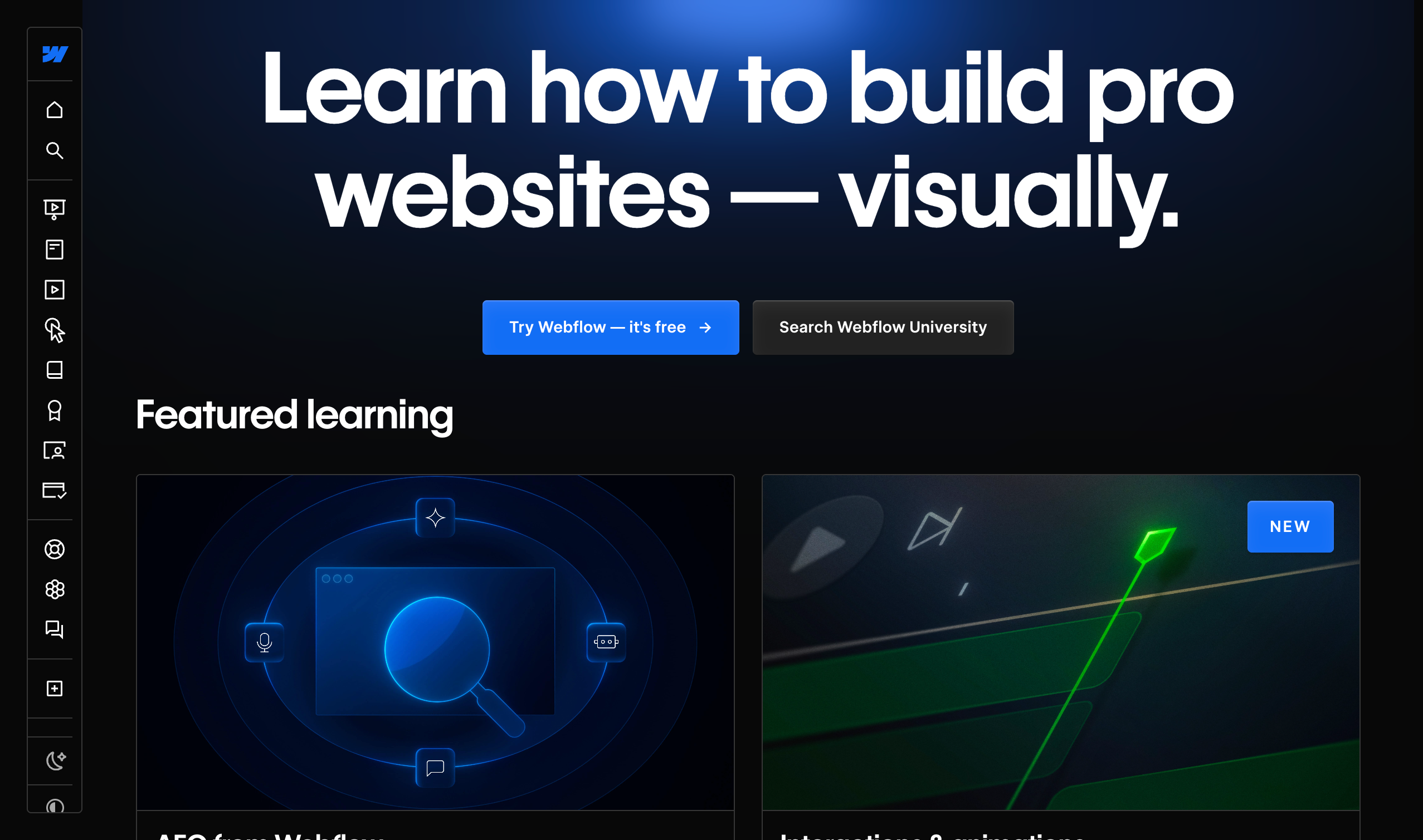
What makes Webflow University stand out is its high focus on visual and interactive content, and how it fully leans into this "university" experience of educating you on the platform. It is well organized into clear learning paths that take users (or prospect users) from the basics to more advanced topics unique to the tool. It's important to note that Webflow still has other knowledge base sites such as their more technical documentation for developers (hosted at developers.webflow.com and a more conventional help center at help.webflow.com .
The information architecture on Webflow University is clean, and content is easy to discover through categories and search. By combining short, focused articles with longer-form tutorials and video content, Webflow meets users where they are, whether they want a quick answer or a more guided walkthrough.
Airbnb Help Center
To give an example of a non-SaaS company, we've chosen to include Airbnb’s Help Center in our list of strong examples of good external knowledge bases. This help center is built for a broad, non-technical audience at massive scale, and unlike developer docs or learning hubs, Airbnb's knowledge base is designed to support two very different user groups; guests and hosts - each with their own needs, questions, and problems to solve.
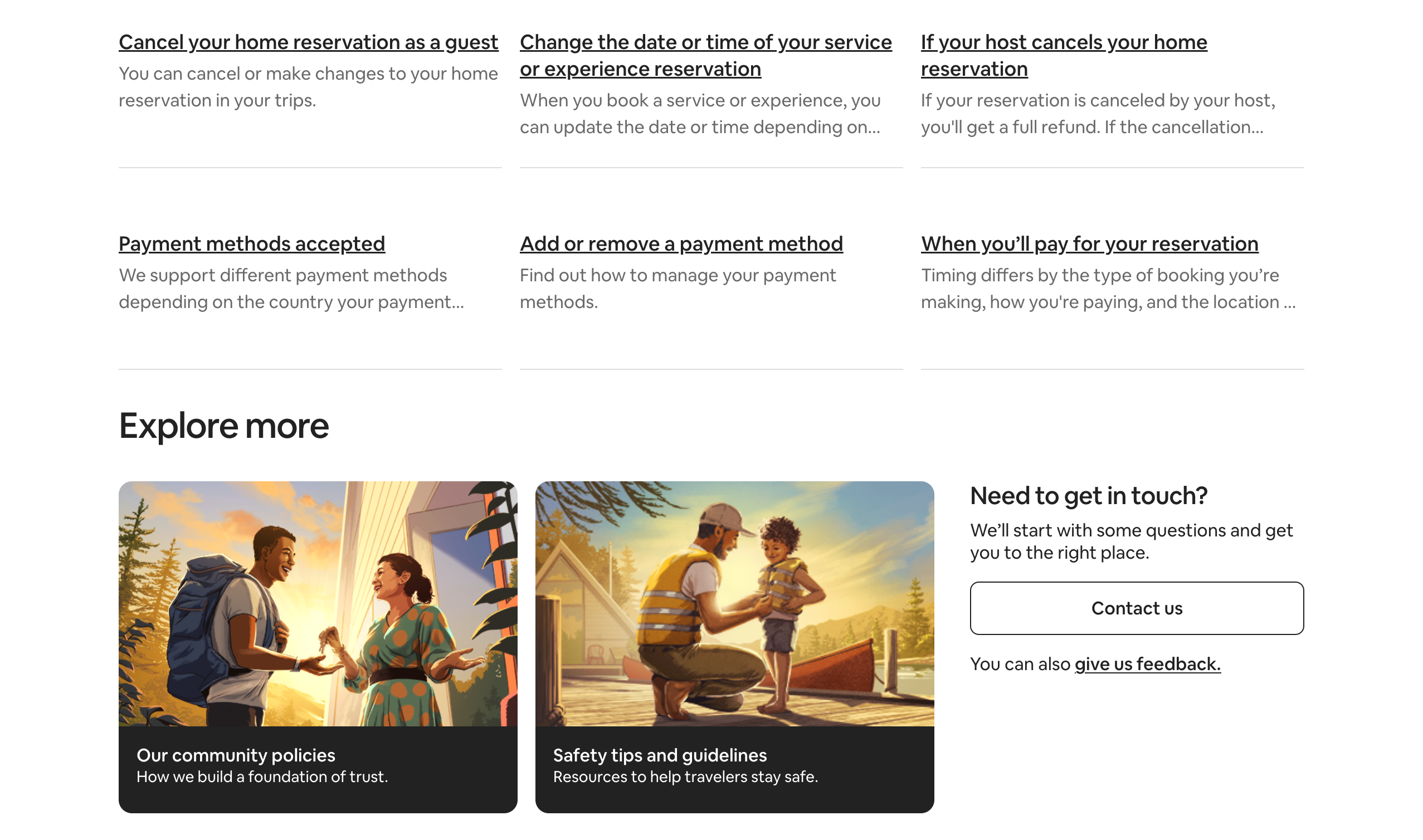
What makes Airbnb's Help Center work well is how clearly it segments and structures information for these two target groups. Users are guided early to identify whether they are a guest or a host, and the content hierarchy that follows reflects real-world journeys such as booking, payments, cancellations, hosting setup, and issue resolution. This makes it easier for people to self-serve even when they arrive with vague or emotional problems rather than precise queries.
Search and categorization work together to help with relevant answers quickly, and many articles are written in a task-oriented, step-by-step format that helps users resolve common issues without contacting support. At Airbnb's scale, this kind of clarity and structure is critical.
Linear Docs
Circling back to the SaaS-world, Linear's Help Center is a great example of a small but high-quality external knowledge base. Unlike large platforms with thousands of articles, Linear keeps its knowledge base intentionally focused and concise - leaning into it already strong reputation for having a clean, minimal user experience. Despite being simple, Linear does a great job at meeting the customer or user's questions through an easily navigable structure and well formulated help articles.
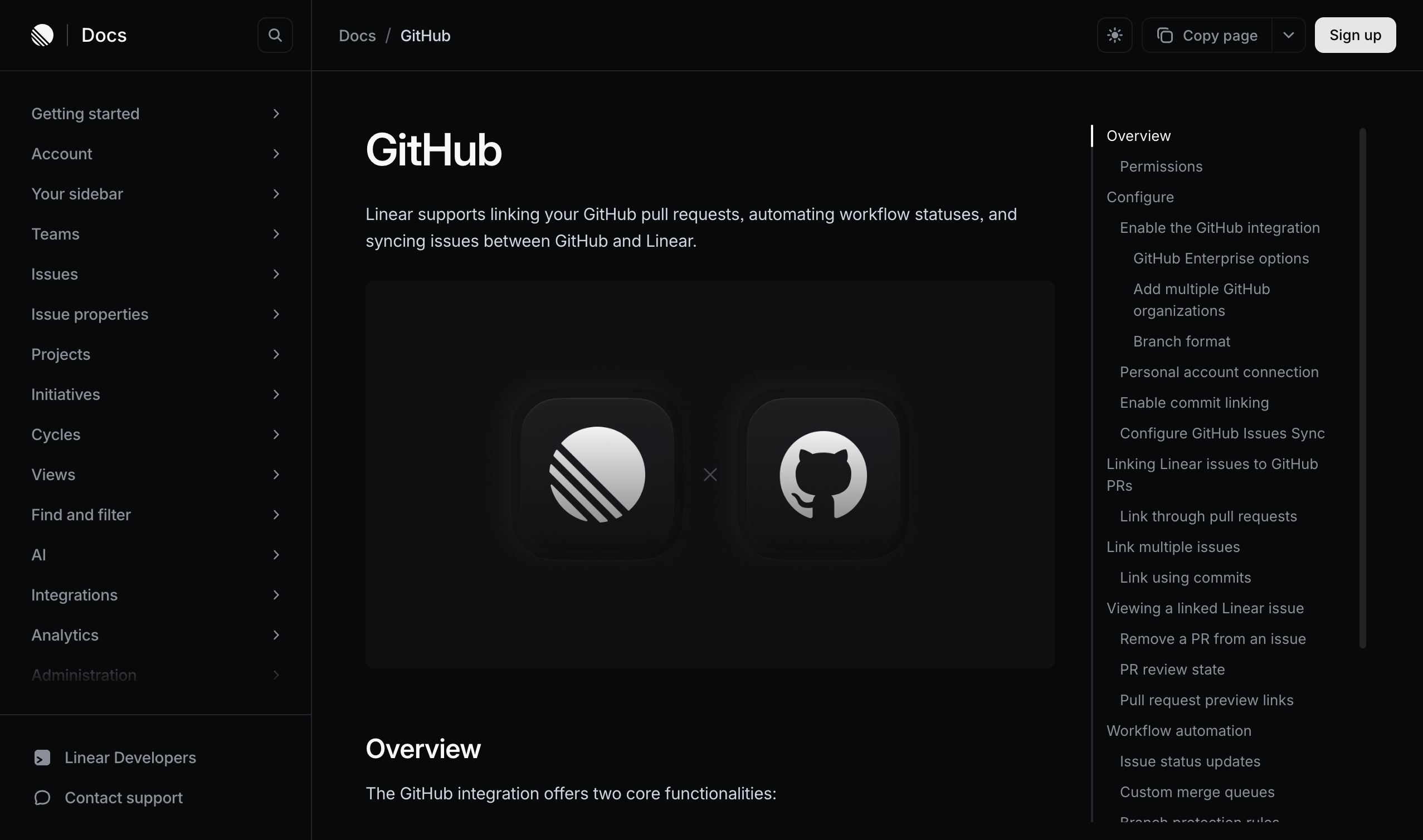
The structure is clean and minimal, with content organized around core product concepts, workflows, and common questions. Articles are short, scannable, and written in plain language, which makes it easy for users to find answers quickly without wading through unnecessary detail. Similar to Webflow and Stripe, the hierarchy mirrors how people actually use the product, from getting started and core features to more advanced workflows and troubleshooting.
The Duolingo Help Center
Duolingo's Help Center is a great example of an external knowledge base built for a massive, non-technical consumer product. Unlike tools like Stripe, Linear, or even Webflow, Duolingo's knowledge base is designed around behavior, motivation, and learning habits rather than features or workflows.
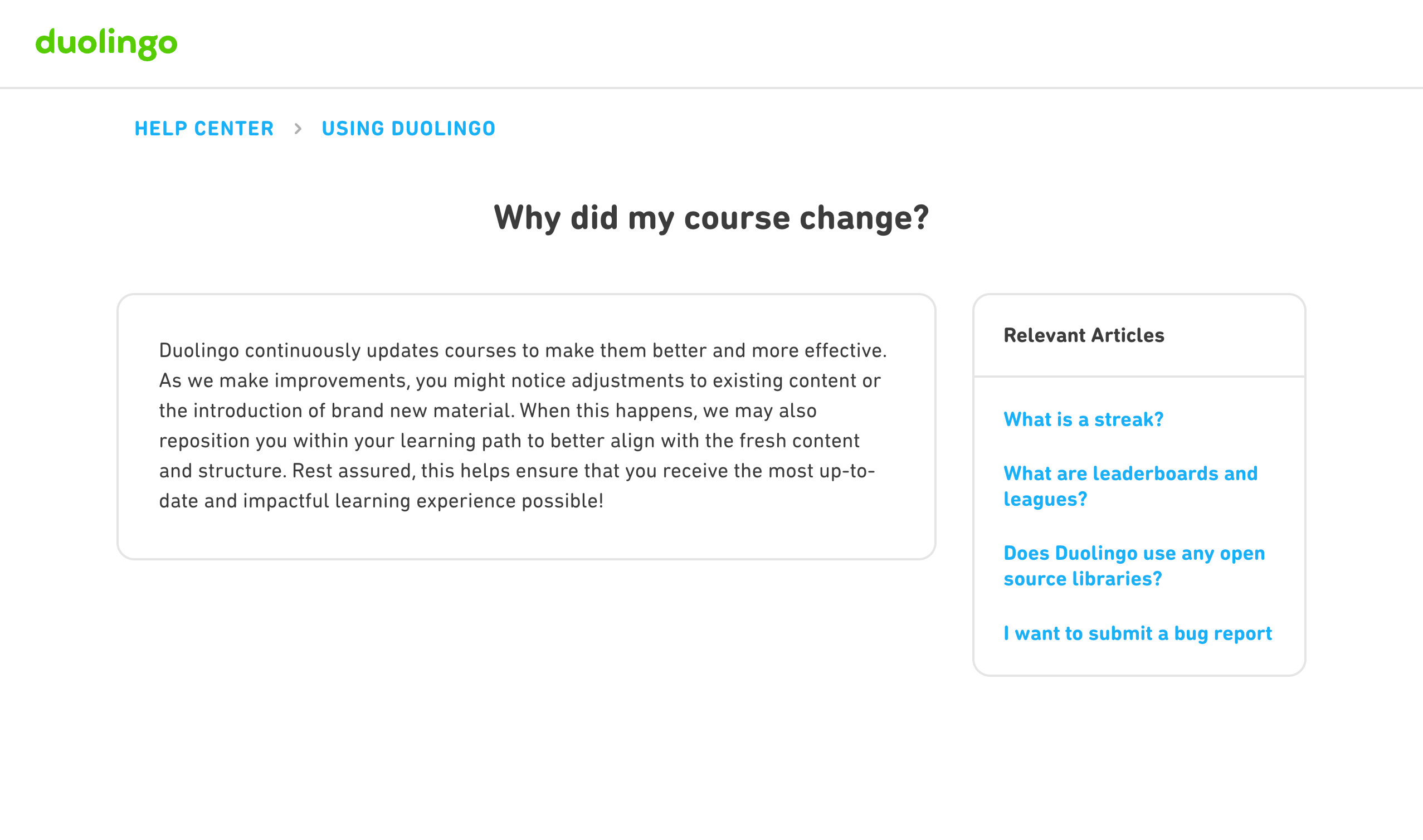
The structure reflects real user questions like progress, streaks, reminders, subscriptions, and account issues. Content is written in plain, approachable language and optimized for fast self-serve resolution, which is critical when your user base spans all ages and technical skill levels.
What makes Duolingo interesting as a final example is how the knowledge base supports product psychology as much as product usage. It helps users understand how the system works, why certain mechanics exist, and how to stay on track, showing that a great knowledge base isn't just about "how to click buttons," but about supporting the user's journey and motivation.
Conclusion
Great external knowledge bases come in many forms, but the best ones share the same fundamentals: clear structure, strong search, and content built around real user problems. Whether it's technical docs, a learning hub, or a help center, treating your knowledge base as a core product surface pays off, reducing support load, improving onboarding, and making your product easier to use.